Geometry and clearance
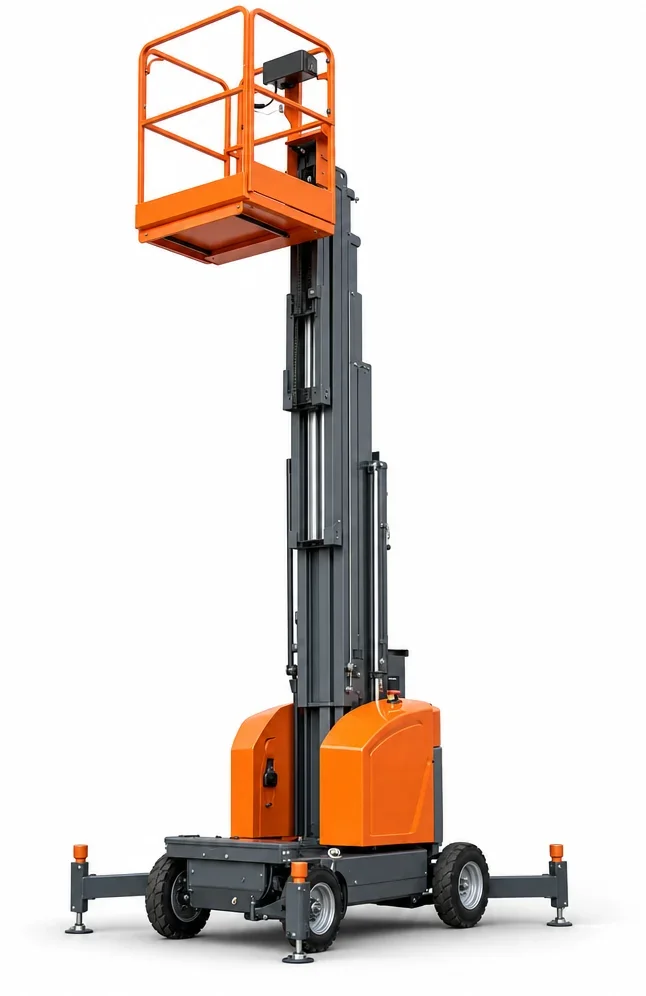
A vertical mast’s value is its small chassis and tight turning radius. When the platform can sit directly below lighting, signage, or sensor runs, this class reaches working height without needing the deck width of a scissor. Check overhead clutter—low struts or conveyors can limit extension or require an alternate path.
Key constraints: - Doorway and elevator dimensions from staging to the work area - Minimum aisle width around racks, equipment stands, or office furnishings - Floor loading limits in mezzanines or older structures
Local building patterns and climate notes
Regional logistics buildings often mix office pods with warehouse floors. A mast lift can pass through standard doors to handle punch-list tasks without forcing wide-door moves. Summer heat in uncooled interiors can affect electric battery endurance across long days; planning typically accounts for charging proximity between tasks.
When to consider another category
If multiple workers or materials need a shared platform, a narrow electric scissor may be more efficient. For up-and-over reach around obstacles, consider /articulating-boom-lift-rental/. For exterior or uneven-surface platform work, review /rough-terrain-scissor-lift-rental/.
Common tasks around the city
- Lighting, sensors, and cabling runs along interior aisles
- Signage and device installs in office-to-warehouse transition zones
- Inventory, safety equipment, and light MEP work where compact access matters
For a broader aerial overview, see /aerial-lift-rental/ and /products/.