Start with the load profile and run window
Power planning begins with steady versus surge demand and the length of the shift. Warehouse fit-outs along the logistics corridor often run long cables to mezzanine tools and temp lighting, which increases voltage drop and may push you toward a larger generator. Night concrete pours and security lighting need predictable run windows; the fuel capacity and service interval of the chosen unit set that boundary.
- Steady vs. cyclical loads: compressors and pumps swing differently than lighting strings.
- Distance to loads: longer cord runs require headroom to handle drop.
- Refuel access: can a truck reach the unit without crossing active work?
How local conditions shape the choice
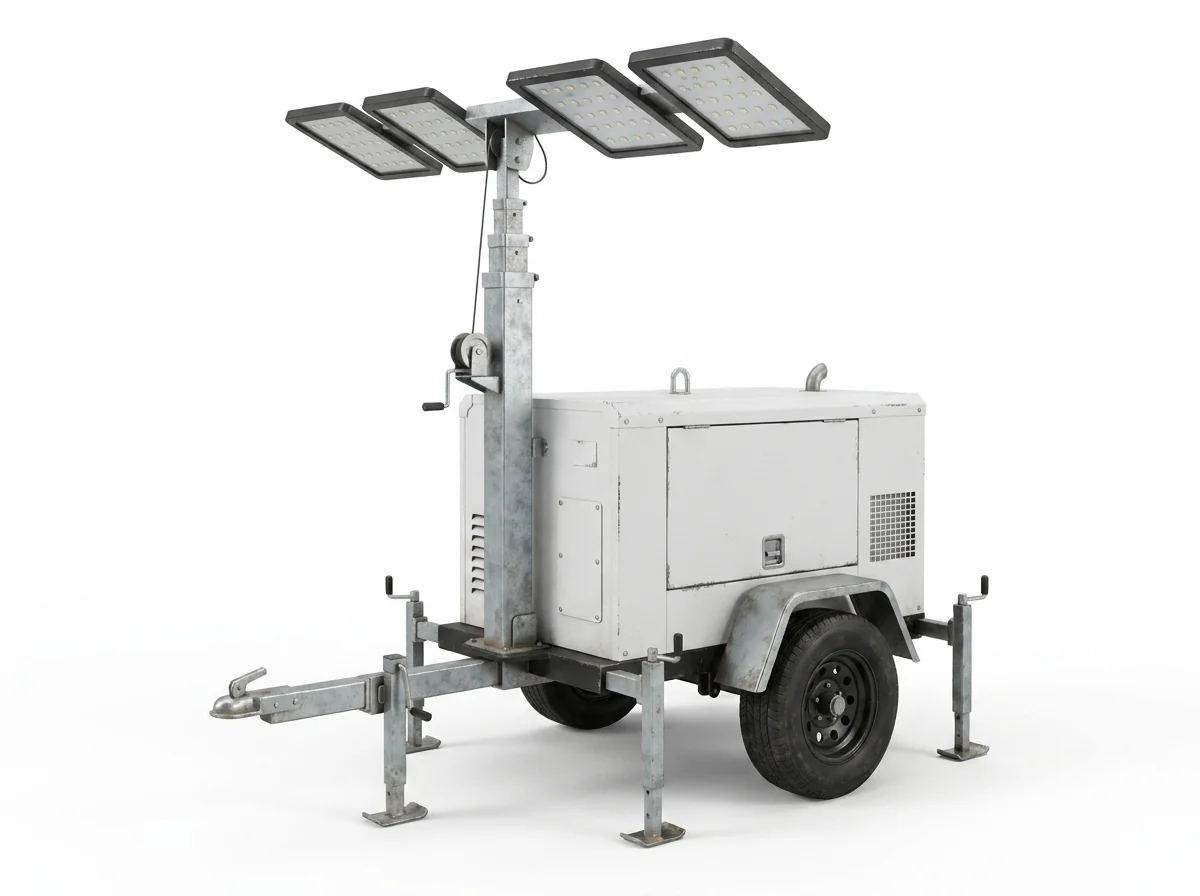
Open industrial sites in El Paso see spring winds that affect tower stability and light aim. In exposed yards, plan for a light tower that can be positioned to minimize shadow bands and sway. Summer heat inside uncooled buildings impacts generator cooling and continuous output; placement with clear airflow and away from dust lanes in staging areas helps maintain performance. On interior maintenance at local distribution buildings, electric loads are cleaner, but heat can still stress equipment left near sun-facing openings.
Surface, route, and placement constraints
- Surface: caliche, compacted base, or paved lots change tow speed and leveling needs.
- Route: verify gate widths, curb cuts, and any grade transitions at dock aprons.
- Placement: can the unit sit below the task and stay outside lift travel paths?
Light level and mast decisions
Work type sets the target light pattern more than the wattage label. Long aisle work favors narrow, higher masts aimed along racking; slab work benefits from broader distribution. Spring wind exposure narrows mast height choices outdoors. Indoors, portable LED strings may pair with a smaller generator if circuits are isolated and surge is low.
Related access planning
If the same job includes elevated tasks, match aerial equipment to the surface and wind exposure before finalizing power and lighting placement:
- Interior racking or MEP work: see /electric-scissor-lift-rental/ or /vertical-mast-lift-rental/.
- Exterior siding or signage in wind-prone zones: start with /rough-terrain-scissor-lift-rental/ or /boom-lift-rental/.
Information that narrows the unit quickly
Have these details ready: - Total running watts and largest single-start load - Expected shift length, quiet-hour limits, and refuel plan - Ground type, slope, and space to swing a towable unit - Typical wind exposure on the pad and any shielding from buildings
Actual site conditions, the selected unit’s instructions, and site procedures govern how lighting masts are deployed and how generators are positioned on active jobs.