Map the traffic before the panels
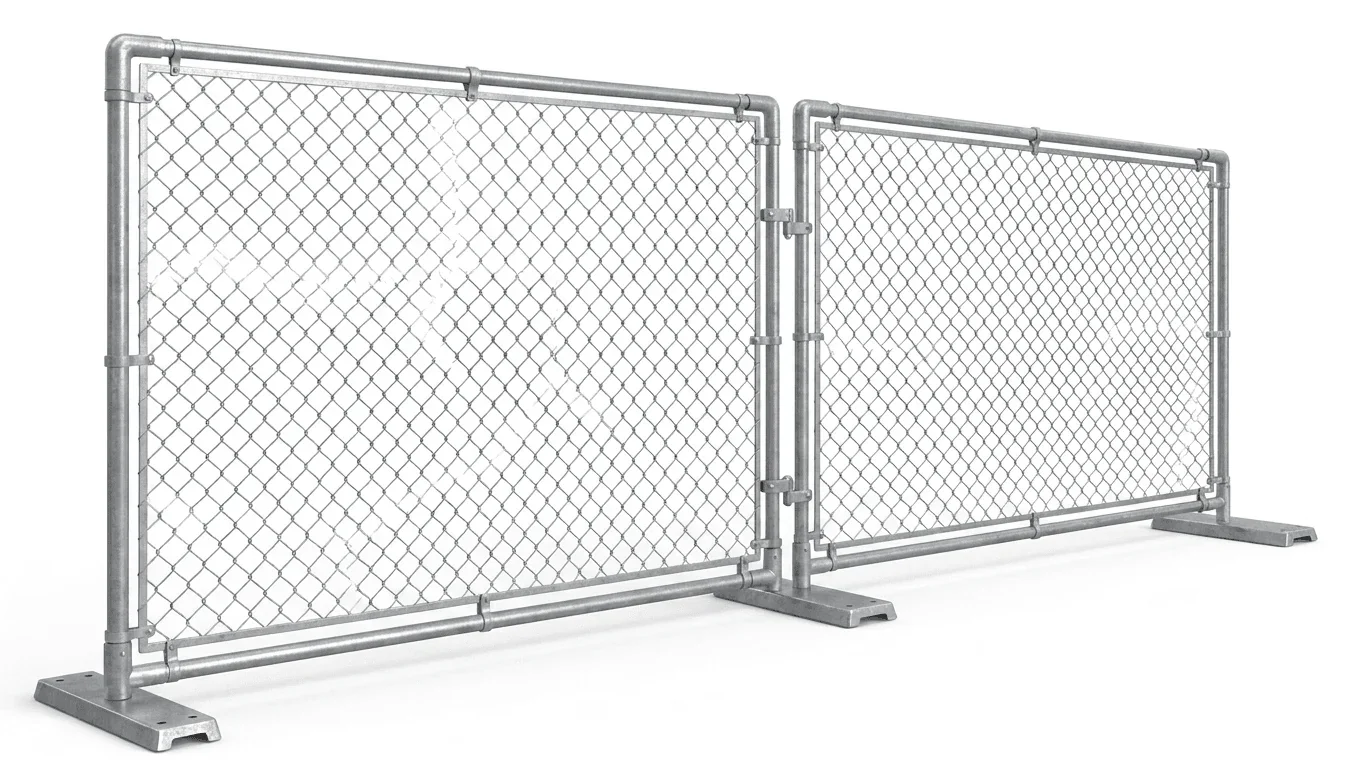
Perimeter choices change with the mix of forklifts, scissor lifts, and tractors moving through staging areas. In distribution yards and build-outs, keep fence lines outside aerial-lift turning envelopes and away from generator or light-tower pads. Barricades near dock aprons should define no-park zones without blocking sightlines for spotters.
Ground and exposure in a high-desert setting
- Surface: asphalt and concrete accept weighted bases; caliche and loose fill may need different site-stability planning approaches.
- Wind: spring gusts raise loading on long, straight runs. Breaking lines into shorter sections with controlled offsets reduces sail effect.
- Heat and dust: panel fabrics or screens used for privacy change wind load and collect dust; plan shorter spans and more clearance near high-traffic corners.
Access control and visibility
Entry points should accommodate the widest expected load and any boom or mast swing from nearby equipment. Where night work is planned, integrate panel placement with /generators-light-towers-rental/ to keep gates and pedestrian paths illuminated without glare into operator sightlines.
Adjacent elevated work
If fencing protects areas under elevated tasks, coordinate with /electric-scissor-lift-rental/ for interiors or /rough-terrain-scissor-lift-rental/ outdoors so swing and descent paths do not intersect the fence. Actual conditions, the selected unit’s instructions, and site procedures govern barrier placement around elevated work.
Information that narrows the setup
- Total linear footage and number of gates
- Widest equipment passing through and turning radius
- Surface type along the entire run
- Expected wind exposure and any need for screening