Aerial access: interior versus exterior
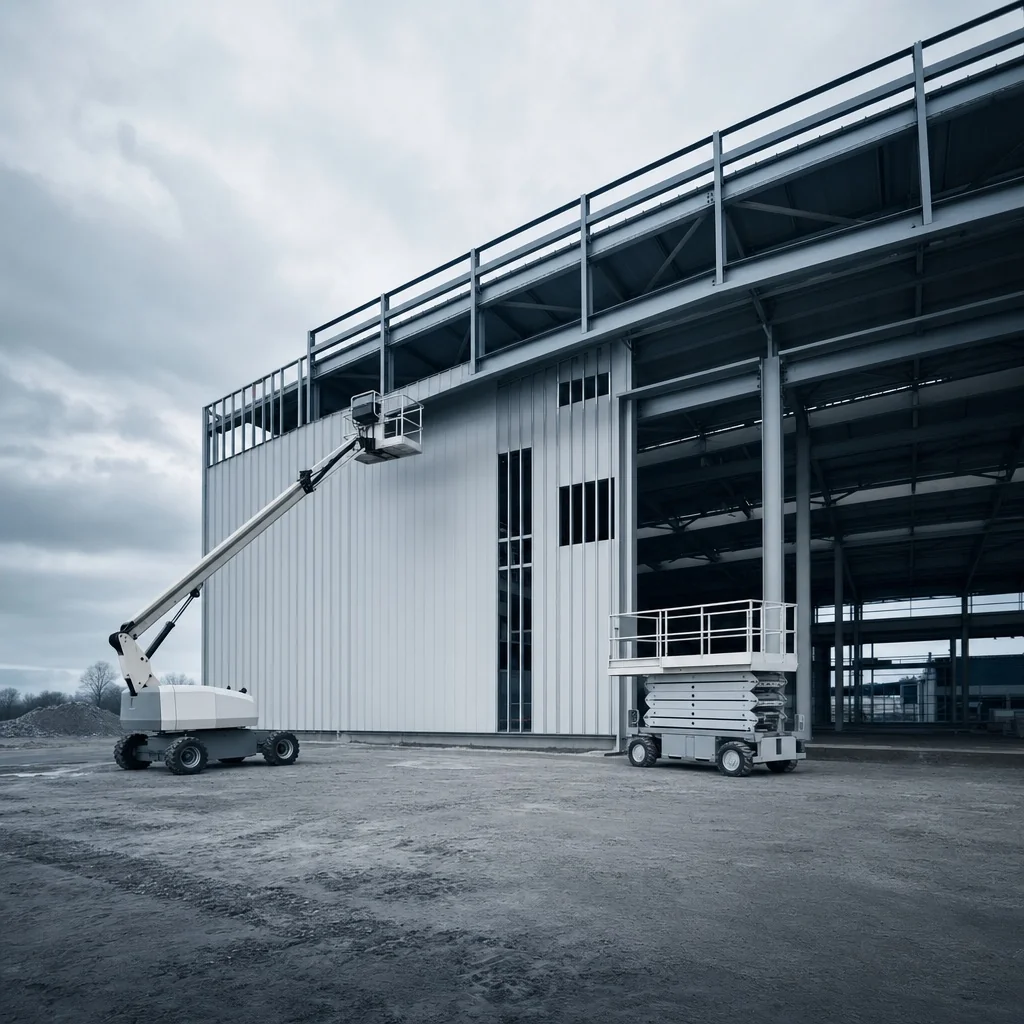
- Electric scissor lifts: best when the machine can sit under the task on smooth slabs in high-bay interiors. See /electric-scissor-lift-rental/.
- Rough-terrain scissor lifts: for open slabs, yards, or unfinished sites where wind and grade are factors. See /rough-terrain-scissor-lift-rental/.
- Articulating and telescopic booms: when the machine cannot sit below the task or obstacles require up-and-over reach. See /articulating-boom-lift-rental/ and /telescopic-boom-lift-rental/ or /boom-lift-rental/.
- Vertical mast lifts: compact interior work near racking or tight aisles. See /vertical-mast-lift-rental/.
Actual conditions, the selected unit’s instructions, and site procedures govern elevated work.
Material movement and staging
- Forklifts: dock work and pallet handling in distribution buildings. See /forklift-rental/.
- Telehandlers: rougher surfaces or when placing loads at height outdoors. See /telehandler-rental/.
Site power and lighting for extended shifts
Long fit-out schedules and night staging across local distribution corridors often require portable power and lighting. Plan around load profile, wind exposure at the pad, and the distance to work areas. See /generators-light-towers-rental/.
Perimeter, storage, and flow
- Temporary fencing and barricades: define safe paths around lift traffic and protect work zones, especially in wind-prone yards. See /temporary-fencing-barricades-rental/.
- Storage containers: secure materials close to the task while preserving lift corridors and dock visibility. See /storage-containers-rental/.
Local factors that change the comparison
- Spring winds: narrow exterior lift choices and affect light-tower mast plans.
- Summer heat: influences battery performance for interior electric machines and cooling for generators.
- Route geometry: long runs from staging to task are common in large industrial sites; confirm slab condition and door heights.
Details that speed up the match
Have these on hand: - Task height, outreach, and whether below-task placement is possible - Surface type, slopes, and indoor versus outdoor exposure - Gate widths, aisle clearances, and dock heights - Power demand, run window, and need for night lighting